
Home/E-commerce/Case Study
Pucks.pro needed to sell physical products and digital training through one cohesive experience. We designed a Shopify and Moodle architecture that automated enrollment, reduced manual admin, and created a stronger foundation for growth.
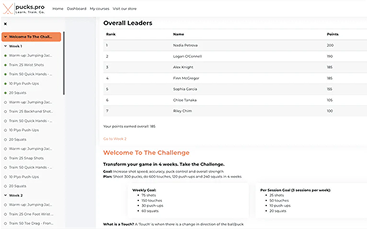
This project shows how we connect commerce, digital products, and learning delivery into one practical system. For Pucks.pro, the challenge was not just launching a storefront or a training platform. It was creating a smooth path from purchase to course access while keeping operations efficient behind the scenes.
E-commerce and training brand
Selling physical products and digital training together
Shopify, Moodle, API-based automation
Automated account creation and enrollment after purchase
Pucks.pro needed a better way to sell across two different kinds of products. The business offers physical hockey products while also delivering premium online training through its “5000 Puck Challenge.” That created a real operational challenge: one side of the business needed strong e-commerce capabilities, while the other needed a proper learning environment for structured course delivery.
Using only Moodle would have limited the commerce experience. While Moodle can support course delivery well, it is not built to match the storefront quality, merchandising flexibility, discounting, and checkout strength of a dedicated e-commerce platform like Shopify.
Using only Shopify would not solve the learning side of the problem either. The business still needed a dedicated environment for learner access, course structure, and digital training delivery. The real need was a system that could combine both without forcing the team into manual fulfillment every time someone purchased a course.
Rather than forcing one platform to do everything, we designed an architecture that used each platform for what it does best.
We architected a solution that used Shopify as the front-end sales engine and Moodle as the back-end training delivery platform. This created a cleaner, more scalable setup for the business while improving the customer experience from checkout to course access.
1
The public-facing storefront was built around Shopify, giving Pucks.pro a strong commerce foundation for both physical and digital offers. This allowed the business to manage merchandising, promotions, checkout, and product sales in one place.
2
We built the integration layer that connected Shopify purchases to the dedicated Moodle training environment. When a customer purchased the “5000 Puck Challenge,” that event triggered a secure process that communicated with Moodle.
3
Once a qualifying purchase was completed, the system automatically created the learner account if needed and enrolled the customer in the correct Moodle course. This removed fulfillment delays and reduced repetitive admin work for the business.
This project was not just an implementation task. It was an architecture and workflow design challenge. Our role was to design the right platform model, connect the systems involved, and remove friction from both the customer experience and the business operation behind it.



Moodle plugin certifications
The value of the project was not only technical. It came from choosing the right architecture for the way the business actually sells and delivers its products.
Customers purchase through a polished Shopify storefront and checkout flow rather than a more limited LMS-only commerce setup.
The business can manage revenue, promotions, physical product sales, and digital offers through a more centralized commerce workflow.
Course access is provisioned automatically after purchase, giving users immediate access to training.
No manual account creation. No manual enrollment. Fewer repetitive tasks for the business team.
The setup supports a business model where physical products and digital training can work together more cleanly over time.
Shopify and Moodle serve different purposes well. Shopify is better suited for storefronts, checkout, promotions, and physical product sales, while Moodle is better suited for course delivery and learner management. Connecting them allows a business to use both platforms more effectively.
Yes, with the right integration workflow, a Shopify purchase can trigger automated account creation and course enrollment in Moodle. This reduces manual fulfillment and speeds up access for the customer.
A hybrid setup is often the better choice when a business needs stronger e-commerce capabilities, sells both physical and digital products, or wants a more advanced storefront and checkout experience than Moodle alone can provide.
We designed the platform architecture, established the role of Shopify and Moodle within the solution, built the automated workflow between them, and improved the path from purchase to course access.
The storefront, the training site, and the automation between them are all running today. Explore the product, or connect with Frederick on LinkedIn.